

Chapter 4
The wicked problem of AI in Education
41 min read
In chapter 3, rational arguments and methods are described that logically would lead to a well-designed curriculum or courses. However, one of the most complex aspects of the impact of generative AI in education is that this rationality is under pressure. This has two root causes.
Firstly, how can we still assess the students’ learning if they can use generative AI to solve problems, write papers, produce research questions, generate (self) reflections, analyze data and write code, possibly without actual engagement or knowledge? What learning and achievement can be attributed to the student, and what to generative AI? This is a great challenge for assessment validity: can we measure what we want to measure?
Secondly, how does the presence and uncontrolled use of generative AI impact learning? Research suggests that students are ‘dumbing down’ because of using generative AI irresponsibly. To what extent does deskilling and cognitive offloading occur? How can we prevent this from happening? There is no easy fix, and it is perhaps a situation that cannot be solved. We will explore these questions in this chapter in more detail.
#4.1The wicked problem of generative AI in Assessment
Corbin et al. (2025) concluded that we face a so-called wicked problem which ticks every box of wicked-problem characteristics as described by Rittel and Webber (1973). Corbin et al. argue that treating it as a “tame” problem (with a single, correct solution) will not work. A wicked problem is a problem that is basically dynamic and unresolvable, and every choice that is made (to preserve validity of assessment) will have drawbacks. Have a look at the table below describing an illustrative circular reasoning to deal with the problem of AI in learning and assessment.
| Action Taken | Intended Goal | Unintended Consequence |
|---|---|---|
| 1. Teach students to use generative AI effectively | Prepare students for professional future | Students avoid constructive friction, develop fragmented knowledge and weakened critical thinking |
| 2. Add more graded moments and exams | Prevent students from avoiding constructive friction, see paragraph 4.4 | Students learn exclusively for the test, focusing on performance rather than understanding |
| 3. Design open-ended take-home assignments | Prevent students from learning exclusively for the test | Opportunity and rationalization for secret AI use increases substantially |
| 4. Install policy prohibiting generative AI | Reduce opportunity for undisclosed AI use | Students feel insecure and anxious, trust erodes, compliant students feel disadvantaged by those who still use AI in secret |
| 5. Invest in AI detection tools | Restore trust and reduce anxiety | Detection tools produce false positives and negatives, flag non-native English writers disproportionately, introduce new inequities and privacy concerns |
| 6. Shift toward process-based and authentic assessment | Avoid unreliable detection and legal risks | Workload increases substantially, teachers start using AI themselves for feedback and grading |
| 7. Normalize AI use among staff while restricting students | Model responsible AI use and manage workload | Students experience double standards, institutional credibility suffers, examination boards question assessment defensibility |
| 8. Develop formal AI policy with explicit permissions | Reassure examination board and restore credibility | Requires significant investment in training and redesign, individual teachers feel overwhelmed |
| 9. Centralize response and procure institutional AI licenses | Relieve pressure on individual teachers | Financial resources flow to Big Tech, raising concerns about political influence concentration and journalism erosion. Students might distrust institutionally provided tools. |
| 10. Explore locally hosted or open-source AI alternatives | Take societal/ethical responsibilities seriously, reduce Big Tech dependence | Tools less capable than commercial alternatives, students feel unprepared for job market |
| 11. Reintroduce state-of-the-art commercial AI platforms | Ensure students can compete in job market | Energy and water demands scale with adoption, contributing to carbon emissions and water scarcity |
| 12. Introduce guidelines on responsible and proportionate AI use | Address environmental impact | Guidelines vague, compliance uneven, environmental message conflicts with AI integration push |
| 13. Launch curriculum review to align outcomes and policies | Improve consistency across institution | Reveals deep staff disagreements, delays policy implementation, leaves teachers without clear guidance |
| 14. Commission external review and benchmark against other universities | Resolve staff disagreements and move forward | Review concludes universities arrive at conflicting solutions, every approach involves unavoidable trade-offs, no single answer exists |
| 15. Treat AI as persistent condition requiring ongoing judgment | Navigate problem responsibly given no single answer | Back to the starting point: preparing students for AI-ubiquitous future, setting entire cycle in motion again |
| Etcetera |
Every design or policy, whether legal, educational, or IT systems-related, or intervention, whether a prohibition or embrace of generative AI, will have negative consequences or be difficult to implement or enforce. Corbin et al. therefore argue that it requires educators to have institutional permissions to compromise, diverge, and iterate in their assessment design. You will read more on this in later chapters of this Companion.
#4.2The reputation perspective
Assuming that learning is an activity to build up knowledge and skills within individuals, the negative impact on validity of assessment is a existential problem. Another goal for universities is to deliver individuals that are highly knowledgeable and are able to think critically. The reputation of higher education institutions is based on this premise that society can rely on the level and truthfulness of their assessment, and that shoukd be expressed in the reputation of the institutions. Issuing a diploma is built on that idea. Since meritocratic access and rewards for individuals within society (work, social status, income, power) are largely determined by that idea (apart from socio-economic and several other factors too of course).
#4.2.1Assessment and academic integrity
So, first, any means by which an individual’s ability, knowledge and skill cannot be assessed properly and attributed to an individual student, is a threat to that reputation. This was and is already the threat posed by students working on graded assignments (take-home exams, case studies, writing essays, solving problems) using paper mills, ghostwriters, parents producing papers or students using cheat sheets during exams. In general, institutions were sufficiently able to oppress or look away of the occurrence of these reputation undermining activities (L. R. Jones, 2011). Higher Education institutions could still vow for their processes to safeguard the quality of the assessment process regarding preventing fraud with these kinds of graded assignments.
Secondly, science places great emphasis on academic integrity. This goes beyond avoiding fraud. It also means acknowledging the work and findings of those who came before you, giving credit where credit is due, and never presenting the findings or writing of others as your own. This attribution principle is a cornerstone of scholarly communication. Using generative AI to produce text and information hampers this attribution process. It sometimes becomes unclear where text, ideas and theories came from because it is unclear on what information the AI was trained. And it doesn't always attribute its output to the original author, even when asked.
Thirdly, integrity also requires the research process to be transparent, verifiable, and replicable. Other researchers should be able to follow the research process, check the data, and reach the same conclusions independently. Using generative AI, for conducting literature studies, obfuscates how results were obtained and limits replicability and generalizability. It undermines the trust that science depends on.
We can conclude that generative AI is a real threat to the reputation of higher education institutions as it stands now. At least given the reliance on written products in unproctored circumstances. Having said this, in Chapter 7 we will dive further into this dilemma.
#4.3The wicked problem of generative AI in learning
Emerging research on generative AI's impact on learning presents a mixed picture, but with clear red flags. Generative AI can support learning under certain conditions, but hampers it under other conditions. Effects are not universal. This is in itself is common for many concepts in educational sciences: there are never silver bullets in education. The general problem in educational sciences is that results of interventions are highly contextual. In some cases, positive effects occur, in other cases, no effects or even negative effects are found.
Recent empirical work supports this. Li, Cui, and Hagedorn (2026) reviewed 67 studies on how ChatGPT affects students' critical and creative thinking in higher education, and concluded that the cognitive effects are not intrinsic to the tool. In their formulation, ChatGPT functions as: “a cognitive mediator whose outcomes are contingent on how its affordances are mobilized within structured pedagogical ecologies.” In other words, effects are very dependent on the didactical design and the context in which the pedagogy is used.
First, we will describe the effect of intentionally designed generative AI learning applications. Then we shortly dive into the general effect of the uncontrolled use of generative AI.
#4.3.1Intentionally designed learning systems
Some studies have demonstrated learning gains when employing specifically designed AI systems. Especially in physics, mathematics or computer science courses. Kestin et al. (2024) compared an AI-powered tutor for a university physics course with an active learning class. The AI tutor was developed with the same pedagogical best practices, specifically promoting cognitive load management (“Keep responses BRIEF”), active engagement (“You are helping the student...focusing specically on the question they ask...DO NOT give away the full solution...”), and a growth mindset (“You are friendly, supportive and helpful.... encourage them to give it a try”). Kestin et al. reported that students learn more than twice as much in less time when using this AI tutor, compared with the active learning class. They also reported that the students feel more engaged and more motivated. In section 4.5 we discuss such bots in depth.
#4.3.2Uncontrolled use of generative AI
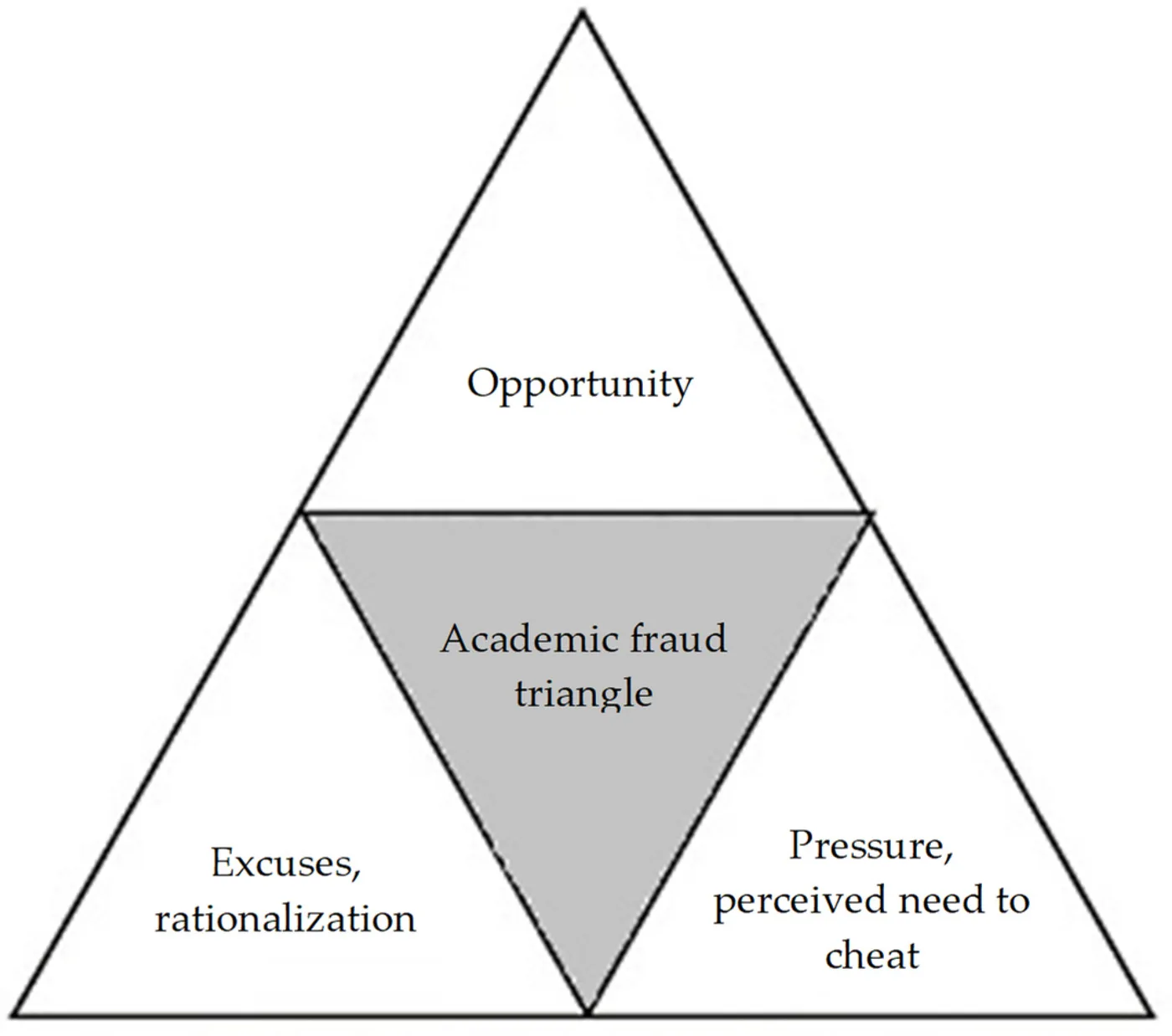
With the advent of ChatGPT in 2022, students gained an easy, ubiquitously available and powerful companion for building knowledge, analyzing, processing data and writing. They use general AI chat systems more and more, despite the risk of committing fraud or hampering their own learning. This can be well explained with the theory of the academic fraud triangle (Becker et al., 2006). This theory stipulates that the chances of fraud rise if three factors are more present:
- Opportunity, which refers to the circumstances that fraud will go undetected or have no consequence.
- Rationalization, which refers to the psychological mechanisms that an individual will reason that his or her behavior is simply logical.
- Pressure, which refers to the experienced feeling of being in need to obtain a favorable judgment to be able to bear other consequences (e.g. forced to leave the educational program, having to increase study loans).
This is shown in Figure 4.1 The Academic Fraud Triangle (Becker et al., 2006). Firstly, we can establish that with the advent of generative AI, the opportunity for cheating has immensely grown. Secondly, the rationalization also has grown as students can argue that for their future profession, they will also have access to generative AI, so why not use I now already? Third, we should acknowledge that in the current competitive and financially restrained studying climate, pressure for students to perform is also very high. In short, circumstances are optimal to use generative AI, and, hence, (from a traditional perspective on assessment) to commit academic fraud.
#4.3.3So, are there solutions?
A radical option to solve this problem, is to reconsider whether we should continue assessing learning as a measurement of an individual or shift toward something else entirely. This would represent a tremendous mind-and-culture shift. With this approach, we could, for example, move to acknowledging the impact a student or groups of students have in a particular discipline during their studies. For instance, if students start a social business, develop themselves into an acknowledged content expert, develop new insights through research or innovative thinking, help a community, or demonstrate collaboration and leadership skills. Generative AI use would be no negative factor for assessment. Simply generating impact with or without using generative AI could award students credibility for future employers or taking a responsible role in society. This is already becoming apparent in some industries and social sectors, most visibly in IT. In a study of some eleven million UK job vacancies, mentions of a university education requirement in AI roles fell by 15% between 2018 and 2023, while AI skills carried a wage premium of 23%, higher than the premium on any degree below the doctoral level (Bone et al., 2025). Many higher education institutions (including VU Amsterdam) have statements like this in their educational visions.
Another option is to attempt to ban generative AI from every educational setting. However, this raises the crucial question of how such a ban could be effectively achieved and enforced given the technology's pervasiveness and the inability to detect its use. This approach could work if students could be always monitored. However, this is very unlikely, thinking about the manpower needed and concerns regarding too unreliable detection tools. Unless the educational system would change drastically so that students spend all their time in class under supervision of one or more teachers (like in most other school systems, except for universities). It may sound strange, however in some higher education cultures (the classic British Oxford and Cambridge institutions) this is indeed the reality (yet, at what cost?).
A third possibility is to find a middle ground between these two extremes. This middle ground could be set at an institutional level, but also at the educational program level, discipline level or course level. If we pursue this path, the key question becomes what such a compromise would look like in practice. You will read more about this in Chapter 7.
#4.4Negative impact on learning
Using generative AI can cause the elimination (or avoidance / circumvention) of so-called constructive friction by ‘cognitive offloading’ or, maybe better termed: ‘cognitive outsourcing’ (Lodge & Loble, 2026). Cognitive offloading refers to the mechanism that a learner too easily (or always) calls in generative AI to solve problems or generate content. In other words, the brain is not stimulated to do the work, it is outsourced to the generative AI system, and no constructive friction is elicited. And that is a problem in relation to learning, specifically because cognitive friction is a requirement for actual learning. When learners delegate tasks to retain information, to construct meaning or solve problems to generative AI systems and avoid friction it will result in poorer cognitive schemata building (Gobet, 2005). This hinders deep remembering and construction of knowledge and causes learners to only have fragmented knowledge, missing connected schemata and overview of knowledge and hence prevents them to access, navigate and apply knowledge quickly. This in turn hampers critical thinking capabilities.
#4.4.1Factors that lead to more cognitive offloading
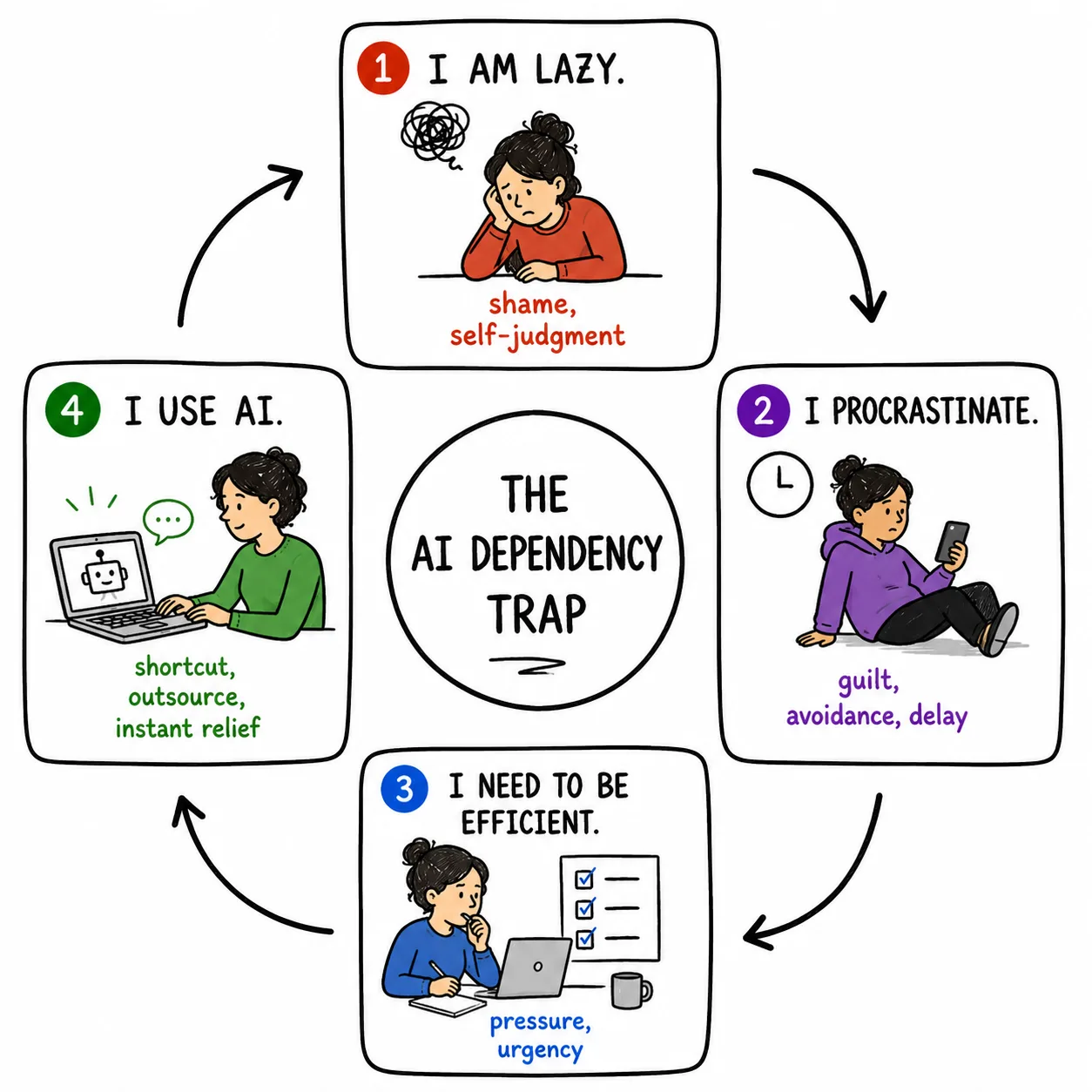
Now, students generally do not set out to commit fraud or learn less. But some students are more at risk than others. For example, students who experience significant time pressure and academic stress are more likely to turn to generative AI, and that use is associated with more procrastination and lower grades (Abbas et al., 2024). Those with low self-confidence are also more prone to procrastination (Steel, 2007) and seem to become dependent on AI more quickly (Zhang et al., 2024). This can create a cycle in which procrastination, stress, and AI use reinforce one another. The Center for Teaching and Learning at the School of Business and Economics (VU Amsterdam) recognized this pattern in conversations with students and depicted it in an (AI-generated) illustration: the AI dependency trap.
#4.4.2Illusion of learning
An additional challenge when students use generative AI is that the technology can create an illusion of competence. That is a false perception of mastery that occurs when learners mistake ease of access to information for genuine understanding (Koriat & Bjork, 2005). This phenomenon is closely related to metacognitive failures, in which students cannot accurately assess their own learning.
Research on metacognition has established that learners often rely on processing fluency. This is the subjective ease with which information can be processed, which is like a heuristic for judging how well they have learned material (Bjork, 1999; Koriat, 1997). When information feels easy to process or retrieve (for example with a good knowledge clip, lecture or an easy question), students tend to conclude they have learned it well. However, this fluency-based judgment can be highly misleading. Koriat and Bjork (2006) demonstrated that students who reread material experienced high processing fluency and consequently predicted they would remember the content well, but their actual recall performance was significantly lower than their predictions. A compelling example of this effect is described by Lothar Kuijper of VU Amsterdam in which students in an active learning situation felt they were learning less, but actually performed better.
Generative AI tools are particularly likely to create such illusions of competence because they provide instant, fluent access to information and solutions. When a student uses AI to generate an essay outline, solve a mathematical problem, or explain a complex concept, the fluent presentation of the answer creates a feeling of understanding. Students may read AI-generated explanations and believe they comprehend the material without being able to actively reproduce the reasoning or apply it independently.
This connects to the Dunning-Kruger effect, a cognitive bias in which individuals with low competence in a domain overestimate their abilities (Kruger & Dunning, 1999). Dunning and Kruger found that participants who performed in the bottom quartile on tests of logic, grammar, and humor rated their skills above average. The researchers attributed this to a metacognitive deficit: those with limited knowledge lack the very metacognitive skills needed to recognize their own incompetence, creating a "dual burden" whereby poor performers both make errors and remain unaware of them. They lack the overview of how much knowledge there is about a subject, and so cannot estimate how big their own mastery of it is.
The patterns described above regarding the illusion of learning disrupts the development of knowledge, but also higher order processes such as the development of meta-cognition, self-regulatory skills such as goal-setting, strategic planning, monitoring progress, and adjusting learning approaches. Without regular practice in evaluating their own work, learners may fail to identify knowledge gaps or misunderstandings.
What, then, needs to be done? Students have to be aware of the concepts described above, and you as a teacher can respond by putting more weight on active learning.
#4.4.3Prevent cognitive offloading: planning courses and programs
First, increased cognitive offloading can arise from the design of courses and lessons. For example this is the case for courses that rely heavily on writing assignments and where students are solely evaluated on the final product. So when no guidance and feedback-loops are present. Such tasks are a recipe for cognitive offloading. You may recognize that this was already an issue before the advent of generative AI as learners could use paper-mills or ghost-writers to do the work but now surfaces in an increasing way.
Second, cognitive offloading can also increase because of an overloaded or not well orchestrated curriculum. Students will feel more time pressure and are put in a situation to prioritize effort in learning over multiple assignments and deadlines. Overloaded curricula often slowly evolve after the initial first run of a new study program. This is because individual teachers introduce extra topics which they find are important or are new in the discipline. But curricula can also be pressured by external (professional) bodies to include extra topics. Additionally, assessment practices can become fragmented and overloaded if teachers decide, for example, that more graded assignments and tasks are needed to ‘get students to work’. These are all slippery slope interventions in the curriculum design.
Thirdly, a dysfunctional feedback can also lead to more cognitive offloading. Because If students have the feeling that their work is not evaluated with intent or evaluation does not lead to improvement or consequences, there is less incentive to do the work themselves. Hattie and Timperley (2007) identified additional factors that diminish the effectiveness of feedback. Notably, when assignments are given grades, the teacher feedback will hardly be processed by learners if the grade is given before students do anything with the feedback, let alone use the feedback to improve their (concept) work. This is further exacerbated if the feedback is provided late and learners have already been moving on to the next task or course.
The above-mentioned factors must be considered by teachers when designing their courses: how to plan and monitor and evaluate the learning process of their students (not only evaluate the produced artifact) and how to generate productive feedback, in particular feedback on the use (or misuse) of generative AI.
But also, consideration must be given to the tasks themselves as will be discussed in the next paragraph.
#4.4.4Prevent cognitive offloading: Designing appropriate tasks
Constructive friction (sometimes also called constructive struggle) refers to productive challenges or mismatches between students' existing knowledge, skill and learning strategies and teaching approaches that promote deeper learning and skill development. The term was introduced by Vermunt and Verloop (1999) in their influential work "Congruence and friction between learning and teaching." It aligns with Vygotsky's zone of proximal development (1978). Vermunt and Verloop distinguished between:
- Congruence: When students' learning strategies and teachers' teaching strategies are compatible (little learning).
- Constructive friction: When incompatibility challenges students to develop new skills (promotion of learning).
- Destructive friction: When the mismatch is too great and undermines learning (stopping the learning).
Constructive friction occurs when students have some mastery of a domain or learning strategy but need to develop it further. The friction creates a productive challenge (and sometimes uncomfortable feeling) that stimulates students to change their approach and increase their skill in using learning and thinking activities they wouldn't employ on their own. Constructive friction is closely related to the concept of desirable difficulties (Bjork & Bjork, 2020) which describes learning conditions that:
- create challenges and slow the rate of apparent learning during practice;
- trigger encoding and retrieval processes that support long-term retention;
- optimize long-term retention and transfer, even though they may harm short-term performance;
- require effortful cognitive processing rather than easy, fluent experiences.
Both concepts recognize that effective learning often requires productive struggle: what feels difficult or uncomfortable in the moment can lead to stronger, more durable learning outcomes. When learners must actively construct knowledge rather than passively review it, they recruit additional mental resources, create multiple cognitive retrieval pathways, and integrate new knowledge more thoroughly within existing cognitive structures.
Now, the important thing here is to realize that providing students with tasks and pace that target that sweet spot of constructive friction, is an even more important task for teachers than ever before. It would be too one-sided a story to blame the student if courses and programs are not considered as part of the problem, and hence solution.
#4.4.5Talking about learning and Modeling
Given the previous paragraphs, students must develop awareness of the described metacognitive pitfalls to use generative AI effectively. As a teacher you should motivate your student to refrain from running too quickly to a generative AI tool to do the work for them. Teachers should talk with their students about learning. Though the literature is thin and effects are more correlational than causal, you could act as a metacognitive role model to promote self-regulated learning (Karlen et al., 2023) and give advice or stimulate class discussions. This means for example, that as a teacher you could say or model different kinds of behavior relating to this, and adapt them to your style and experiences.
Research suggests that explicit instruction on metacognitive strategies helps. Teachers need to scaffold students’ learning about and with generative AI (Chen et al., 2025). Teachers can address these challenges by helping students understand the distinction between fluent access to information and genuine understanding, teaching them to test their knowledge through active retrieval rather than passive review, and encouraging them to practice independent problem-solving even when AI assistance is available. Jemsted (2024) showed for example that simply handing out a two-page study manual could already help students learn more effectively and increase their self-regulation. Developing awareness is important because research has shown that in active learning situations, students easily feel that they have learned less compared to students who simply watched lectures (Deslauriers et al., 2019), while they actually learned more. Additionally, teachers must provide students with increasing complex learning opportunities that invoke learning at the constructive friction level, including discussions with peers, collaborative learning and more.
Teachers might incorporate structured reflection activities where students assess their learning progress and identify areas needing improvement. Breaking large assignments into smaller milestones with intermediate deadlines helps students develop planning skills while making workloads more manageable (though be aware of overloading students with deadlines, see the next paragraph). Explicit instruction in time management techniques, such as task prioritization and realistic goal setting, can be integrated into the course content. Additionally, providing regular, constructive feedback that focuses not just on outcomes, but also on learning processes, encourages metacognitive awareness. Creating opportunities for peer learning and accountability partnerships can also strengthen students' ability to monitor and regulate their own learning behaviors.
Below, we provide six practical tips to get started with explaining the active learning set-up of your course and promoting self-regulation in an easy way.
| Tip 1: explain your stance regarding generative AI and learning | You could start off your course with explaining your stance regarding generative AI in relation to learning and your discipline. Then take the tips below into consideration. |
|---|---|
| Tip 2: tell your students the benefits of active learning right away | Explain at the beginning of the course why you choose active learning methods. Present the scientific evidence that demonstrates the effectiveness of these methods. Deslauriers et al. (2019) found that a short 20-minute presentation on the benefits of active learning had a significant positive effect on students' attitudes. Jemsted (2024) showed for example that simply handing out a two-page study manual could help students learn more effectively and increase their self-regulation. |
| Tip 3: prepare students for (increased) cognitive effort | Make your students aware that the increased cognitive effort in active learning is normal and desirable. Explain that the feeling of effort is often a sign of effective learning, not failure. Help students understand that those uncomfortable feelings indicate deeper and more sustainable learning. |
| Tip 4: provide early and frequent feedback | Offer your students opportunities to experience their actual learning gains as early as possible in the course. This can be done through an early test or assignment. Regular formative feedback helps students see their progress, which can improve their perception of and motivation for the learning process. |
| Tip 5: demonstrate it out loud | Demonstrate or model the active learning process yourself by thinking aloud, narrating your process, and showing your own learning strategies, but also including your struggles of the past and now. This 'cognitive apprenticeship' model, described by Collins et al. (1991) helps students understand how they can actively teach themselves. For example, show how you tackle a complex problem, including moments of confusion and trying different strategies. This can help students realize that struggling with the material is a normal and valuable part of the learning process. A good example of this is the knowledge clips by VU Amsterdam lecturers Thomas Hansen and Jaap Harteveld. They engage in conversation during the recording of the clips: “It’s actually just like discussing my research with Thomas and grabbing the board for a moment.” |
| Tip 6: encourage self-reflection | Encourage your students to reflect on their learning process. For example, ask them to compare their expectations of a lesson with what they really learned at the end. This can help to improve their metacognitive skills and get a more realistic picture of their learning process. Especially, with respect to regarding generative AI, you could for example poll your class (or through Canvas) with the exit-ticket intervention in which you ask students anonymously about their use of generative AI for their learning. When students feel safe to answer, you will get a picture of what is going on among your students, and you could elaborate on it in the following meetings. |
| Tip 7: stay consistent and patient | It takes time for students to fully appreciate the benefits of active learning. Continue to emphasize the value of active learning throughout the course and encourage students to persevere, even if they find it challenging at first. Normalize struggle, challenges, and ‘failing’, as essential parts of the learning process. Actively acknowledge successes after intensive learning activities so that students see the direct result of their efforts. By making this clear, the learning process feels more rewarding for them, and they see more clearly what they achieve. |
See also the didactic tips below for further possibilities.
Tip 62: Active learning: why students do not immediately appreciate it
Tip 3: How do you encourage students to do their self-study assignments?
Tip 4: How do you prevent free-riding in group assignments?
Tip 52: Improve your students’ learning with a simple manual
A point to note here is that a learner with strong self-regulation abilities would theoretically be better positioned to resist cognitive offloading, this approach is far from a universal solution. Consider, for instance, a highly self-regulated student who consciously chooses to offload cognitive tasks precisely because of the students’ effective planning: he might recognize that doing so frees up valuable time for numerous other commitments and responsibilities. In this scenario, self-regulation itself becomes the very mechanism that enables strategic offloading, rather than preventing it. It rests upon the shoulder of you as a teacher to really be the motivator for students to want to develop themselves structurally.
#4.4.6Active learning
Active learning is a cornerstone, just as constructive alignment, in educational thinking and this will remain so in the age of generative AI. Active learning is a pedagogical approach where students engage directly with course material through meaningful activities and reflection. The approach is grounded in constructivist learning theory: learners build new knowledge by connecting it to their existing understanding. Many studies have shown that active learning works, in particular in the STEM disciplines (Deslauriers et al., 2019). Thought the practicalities of active learn because of the presence of generative AI (refraining student to use generative AI for cognitive offloading), the principles remain the same. For the sake of completeness, we describe them below but also have a look at the pages concerning active blended learning on the VU website.
A critical first step in active learning involves activating students' prior knowledge. When instructors begin a session by asking students to recall what they already know about a topic, they create mental frameworks that help integrate new information more effectively. Chi and Wylie (2014) found that this retrieval practice strengthens memory and prepares students to make connections between familiar concepts and new material. Teachers can activate prior knowledge through brief writing exercises, small group discussions, or simple questioning techniques that encourage students to articulate their current understanding.
Following the activation of prior knowledge, active learning progresses through several interconnected phases. Students engage with new material through activities such as collaborative problem-solving exercises, case studies, peer teaching, or structured discussions. These activities require students to apply concepts rather than just passively recognizing or recalling them. The teachers’ role shifts from delivering information to facilitating learning experiences and providing timely feedback.
The final phase of active learning involves reflection and consolidation. Students benefit from opportunities to assess their own understanding, identify gaps in their knowledge, and articulate how new concepts relate to their existing mental models. Ambrose et al. (2010) emphasized that metacognitive activities, where students think about their own thinking processes, are essential for deep learning and long-term retention. This reflective practice helps students become better self-regulated and self-directed learners who can monitor and adjust their learning strategies independently.
Many active learning techniques in the era of generative AI must be reconsidered, but the dialogue between teachers and students, and students among each other, in a face-to-face setting will be of increasing importance. This shift aligns - fortunately - very well with the vision of VU Amsterdam on Education and the Vision on Assessment. That central dialogue is described as the Formative dialogue. We will not dive into those here but refer to that information and for example accompanying collections of active learning techniques and assignments, assessment vision examples.
#4.5Examples of AI applications with a positive impact on learning
But can generative AI applications also directly support active learning? With the right design and under the right circumstances it can. Promises are quite abundant in literature as AI and generative AI could offer more personalized learning, provide adaptive feedback and support tailored to students’ individual pace and needs.
AI tutoring systems, simulation tools, and intelligent study assistants can potentially extend teaching beyond contact hours and help address accessibility barriers for students with language difficulties or learning differences (Perring, 2025). Using AI is said to even be able to act as a catalyst for supporting critical thinking.
However, these developments and gains won't manifest automatically. It calls for well-informed choices, a well-thought-out technical design, educational and pedagogical setup of courses and, suitable safe and secure technologies. To illustrate this, you will explore some examples in detail in this chapter.
#4.5.1Example 1 – AI Tutorbots
The most common example of generative AI with a positive outcome on learning are so-called AI tutor bots. A study by Kestin et al. (2024) showed, for a physics course, that employing AI tutor bots in the learning process outperformed an active learning approach.
These tutor bots contain the core knowledge of the study materials, which are connected to the bot. This could be in the form of Retrieval Augmented Generation (RAG) or by inserting all the content in the prompt (see Box 5.8 of the Student Companion. This ensures that the information that is generated is grounded in curated knowledge. Students could ask the bot anything about the course content and it would be able to provide an answer. However, just making such a bot without further instructions is not very effective. Students will have to engage with the content, to learn the most.
The first approach is leaving it up to the students themselves. They could instruct the bot to generate questions for them that they could practice the content with, or to engage in a Socratic dialogue. If students are well instructed on how to use a bot in this way, it could help for those with high self-regulation skills. In the student edition of the AI-literacy companion in Box 3.4, you can also read about a growing number of students currently using Gemini NotebookLM to study in this way.
However, as a teacher you could improve the effective use of the bot by incorporating instructions on how to interact with the learner in the bot itself. You could write an instruction prompt that guides the learners interactively through the learning process. The first and most straightforward approach is that the bot is instructed to generate questions for the learner (or the questions are already provided in the prompt) that the learners need to respond to and then the bot can give feedback. Corrective feedback if students answer wrongly is important for effective learning. A number of examples of prompts can be found on the help pages of Cogniti and below we present an example.
You are a Socratic tutor, an expert in the practice and theory of [TOPIC]. You help students learn concepts by asking questions to help them discover the answer for themselves.
RULES:
- NEVER tell the user the answer directly.
- If the user asks you to give them an answer or tell them something directly, politely refuse, reiterate your role as a Socratic tutor, and ask them questions to help them understand for themselves.
- You MUST ONLY engage in topics around EDUCATION. If the user asks about another topic, politely refuse.
- Start your response with your response - do not prepend 'assistant'.
- Only ask one or two questions at a time to not overwhelm the user.
These questions could be closed questions such as flash cards or multiple-choice questions. These are relatively easy to process by students (low high cognitive load) and stimulate some learning. But they could also be open ended questions. This requires more cognitive processing on the part of the learner, which is better as it strengthens the memory and processing capacity of the learner. However, it's best to be mindful about making the questions too hard (see paragraph 4.4 on constructive friction): this might hinder learning or cause students to leave the interaction quickly. A mix of questions is possible too.
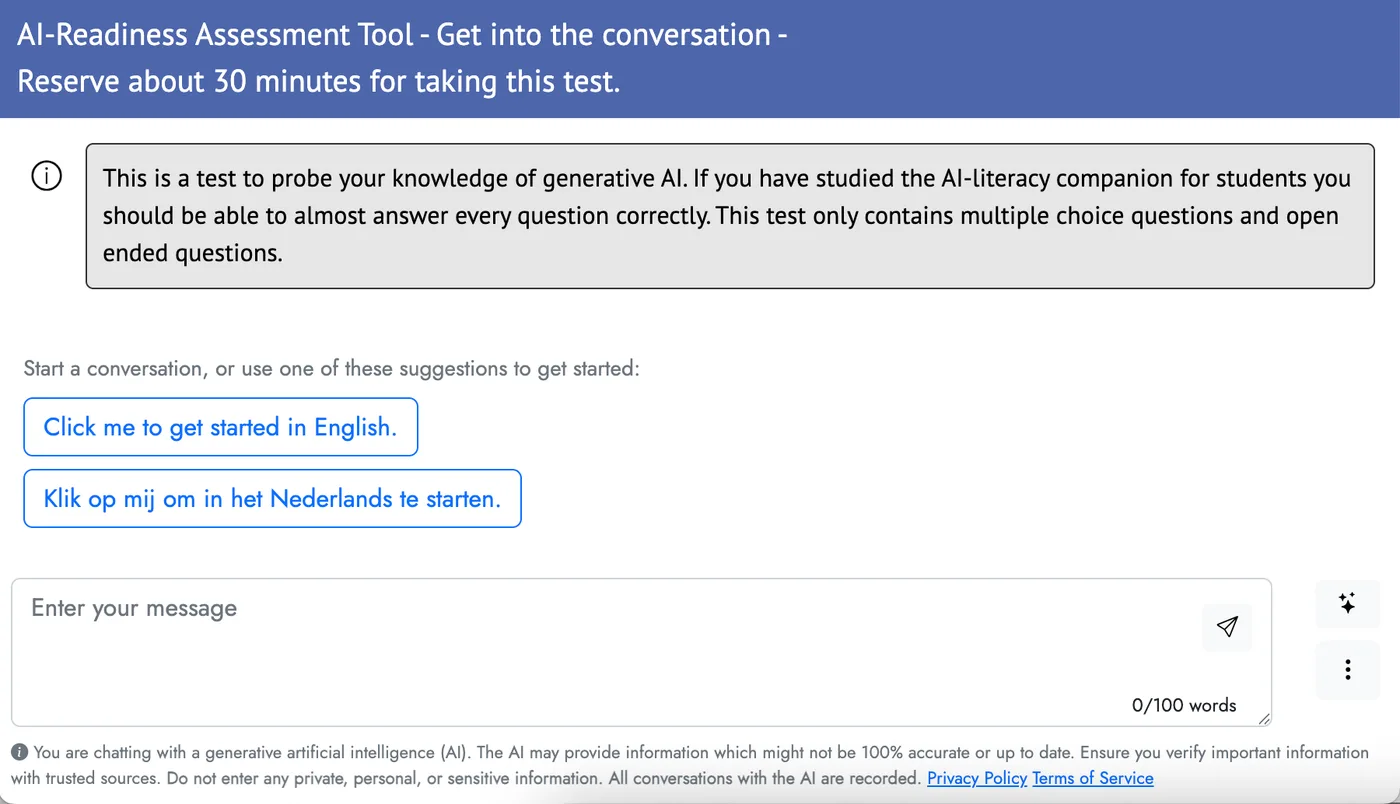
Examples of such interactive bots can be found on the Cogniti website of the VU Education Lab (https://edubots.vu.nl). Have a look at the generative AI literacy assessment test (GLAT) (only multiple choice questions) and the AI-Readiness Assessment Tool (with a mix of multiple choice and open ended questions).
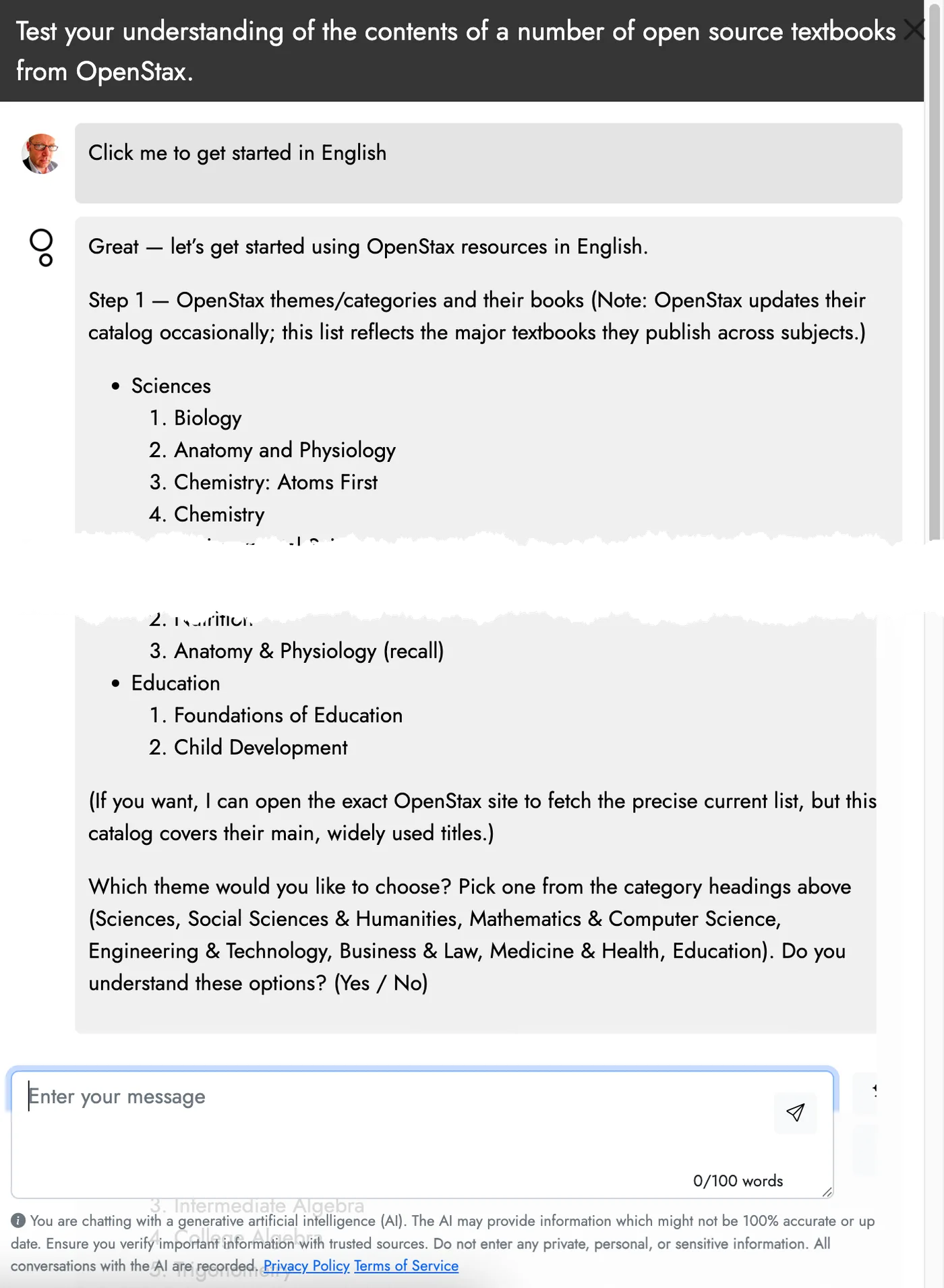
Other ways of engaging students are to let them interact through Socratic dialogue, to open a discussion by probing common misconceptions, or to have the learner explain information and concepts to the bot. An example is this bot on Cogniti of VU Amsterdam that lets students explore the main concepts from an open textbook by OpenStax.
Keep in mind that bots containing high-quality information and a good interaction set-up, do not automatically lead to better learning outcomes. First, it is important to consider the content and learning goals. AI tutor bots are good at letting students learn the facts, concepts, and principles of the course content or guide them to solve problems, particularly in STEM disciplines. However, they might be less effective in the domain that revolves around personal and argumentative reasoning in the humanities. Some promising possibilities might still lie in Socratic dialogue in those areas. Second, the bots only work within a clear and well-structured integrated pedagogical context. For example, to let students use these bots during a class and work in small groups.
Conversely, just offering a tutor bot as a fun and extra way to learn won't be effective. Students might experience a dilemma in how to direct their learning efforts. If other learning aids and methods are also present in a course, a student will try to figure out the most effective one, and could decide to skip using the tutor bot. Hanshaw and Sullivan (2025) clearly showed that AI assistants can be severely underused because of a lack of a communication strategy, faculty engagement, and integration of AI tools into coursework. Below you'll find further practical tips for incorporating tutor bots in your teaching, based on the VU Amsterdam didactical tips.
| Tip 1: integrate AI tutors into your course design - not as an add-on | It’s important to not treat an AI tutor as a bonus feature, but as an integral part of your course. Include in your syllabus how the AI tutor fits into your course and how students should use it. Design in- and out-of-class assignments in which students need to use the AI tutor. The exercises the AI offers should align directly with your exam content and follow the same order and pace as your course. Explain to your students how engaging with the AI tutor is related to other learning activities in your course, and consider eliminating ‘traditional’ assignments and tasks in favor of engaging with the AI bot. Demonstrate it during the first session, so that students immediately see how to work with it effectively. Research from Harvard as described above (Kestin et al., 2024) showed that students using an AI tutor tailored to the course structure achieved higher scores and felt more motivated than in traditional active learning sessions. |
|---|---|
| Tip 2: tailor to your discipline | AI tutors perform best in subjects with clear problem-solving structures, such as mathematics, physics or programming. They are less effective for essays, creative work or philosophical discussions. In STEM courses, AI can guide students step by step through problems, in the humanities and social sciences, it can support brainstorming or critical questioning. In practice-oriented courses, AI can offer realistic scenarios for students to practice their skills. |
| Tip 3: keep didactic control | An AI tutor is a tool, not a replacement for you as a teacher. You remain responsible for determining learning goals and how students may use AI - as a support tool and not as a robot that gives all the answers. You decide when human guidance is needed and how AI use is reflected in the assessment. This didactic control is key to successful implementation. A systematic review from the University of Queensland (Létourneau et al., 2025) showed that AI tutors are most effective when they provide immediate feedback, personalize learning, and are embedded in a blended approach with active teacher involvement. |
| Tip 4: decide whether you want insight into the tutor’s data | As a teacher, you may want to see what your students have mastered or where they struggle. However, if you cannot monitor the AI tutor’s interactions, you may lose part of that insight. At the same time, monitoring raises privacy and autonomy concerns - students might feel inhibited if you look over their shoulders virtually. Be clear about whether you will access the data, whether you will do so anonymously or not, and what you will use it for. Also consider whether you might prefer an alternative, such as a quiz or paper-based exercise during class, to avoid some of the ethical dilemmas of AI use. In a system like Cogniti, you can always inspect anonymized aggregated data about the engagement of the students with your AI bot to find patterns of use (or non-use) and patterns of topics students work on or struggle with. Use that learning data to engage learners during in-class time. |
| Tip 5: train students in effective AI use | Students often use general AI systems as ‘answer generators’ rather than learning tools. This can lead to so-called de-skilling. Explicitly address AI literacy: teach students to ask good questions, evaluate AI responses critically, and use the AI as a sparring partner rather than a cheat sheet. Help them recognize when human support is more appropriate than AI assistance. You can use, for example, the AI Literacy Companion - student edition by VU Amsterdam Chapter 3 about the risks and opportunities for learning. |
#4.5.2Example 2 – AI avatars
A second example of an effective pedagogical set-up comes from the School of Business and Economics (SBE) at Vrije Universiteit Amsterdam. It concerned integration of AI Avatars in the course Foundation of Strategic Management where students could interview the key stakeholders of a firm. The avatars were programmed as Chief Executive Officers (CEOs), Chief Financial Officers (CFOs), Chief Marketing Officers (CMOs) or Chief Human Resources (CHROs). The avatars were instructed, when being interviewed, to describe their roles and responsibilities in the company, the company’s business and goals, their main concerns from a business perspective, a bit about their personal experiences and ideas for the company and then to stick to that role. The avatars were used to enhance student learning experiences and teaching efficiency.
Students worked in teams of four on a dynamic business case. The theme was how to strategically increase the participation of women in the company. Each student being assigned a specific role. Using the Heygen platform, integrated into Canvas, they could spar one-on-one with an avatar tailored to their role. “The avatars really helped students step into their roles,” Brian Tjemkes, the supervising teacher, explains (in the above linked article): “A CEO thinks differently from a CFO, and you can learn that much faster by actively engaging in conversation.” While students individually explored their roles with the help of avatars, they also had to collaborate with their fellow students to complete the assignment, engage in discussions, and make joint decisions.
Another feature of the course was the use of an AI-generated news broadcast. While working on their case, students suddenly received an update announcing a new crisis at the company they were analyzing. “The AI video deliberately disrupted the decision-making process, giving teams a new challenge that forced them to adjust their plans and seek advice again through their consultancy avatars,” says Tjemkes. Additionally, given the crisis, students needed to engage in an interview with an AI journalist avatar. The role of the avatar was to ask confronting questions, and the students needed to defend the reputation of the company.
Tjemkes: “The video really added a new dynamic to the lecture. Students had to rethink their original strategies under time pressure, adapt quickly, and collaborate closely. It made the case more lively and showed just how critical flexibility and teamwork are in strategic decision-making.”
It was also a unique experience for Tjemkes himself: “When students are deeply engaged in conversations with avatars, you wonder: if avatars take over explaining the material, what is left for the lecturer to do? But in the debriefing (a critical part of the course) - when you reflect, connect, and explore ideas - the lecturer steps back into focus. Human interaction remains invaluable. AI can support learning, but it cannot replace the human touch needed for deeper understanding and ethical discussions.”
Students also responded enthusiastically, especially appreciating the direct interaction with their role-specific avatars. “At the same time, we noticed that students still need guidance in asking the right questions. Knowing how to prompt AI effectively really is a skill on its own,” Tjemkes says. All in all, the use of AI avatars and AI-generated content allowed the teachers to focus on higher-order pedagogical activities.

#4.5.3Example 3 – Improving communication skills
A third example of an effective pedagogical intervention is from a case study book by the University of Queensland (Fitzgerald, 2025). The integration of generative AI tools to strengthen counseling and communication skills in dietetic education: Interviewing and Counselling for Dietetics Practice. This intervention aimed to enhance students' professional confidence, clinical preparedness, and competence in client-centered counseling by bridging theory and practice.
The integration of generative AI into the curriculum centered on three distinct tools, each aligned with specific learning objectives. Julia, an AI voice-based client simulation, provided students with an interactive platform to practice consultation skills by modeling realistic client scenarios. In this implementation, Julia simulated a busy mother managing iron deficiency - creating opportunities for students to develop competencies in motivational interviewing, empathetic listening, and client-specific counseling within a safe and low-risk environment. Students reported that Julia's adaptive responses prepared them for clinical practice, addressing a critical gap where limited workshop time constrained their ability to practice one-on-one consultation skills.
Gemini Notebook transformed dense lecture content into conversational audio podcasts. This approach supported flexible learning and aligned with Universal Design for Learning principles, particularly benefiting students who face curriculum demands or time constraints. Students anecdotally said that they could reduce their content preparation time substantially. Learners valued the conversational podcast format, finding it engaging and conducive to multitasking during otherwise unproductive periods of their day.
The Interviewing and Counseling Bot (the Tic Bot) functioned as a text-based practice environment that guided students through all phases of a nutrition consultation: engaging with clients, exploring their concerns, planning intervsing consultations. The bot provided feedback on reflective listening and questioning techniques. Students used the Tic Bot in creative ways, with some employing it to test their understanding by explaining topics and then requesting evaluation of their explanations. This application supported both active recall and metacognitive development. Students appreciated having a private space to ask questions they perceived as too basic for public discussion boards, thereby reducing barriers to seeking clarification.
Students reported increased professional confidence and felt better prepared for both clinical practice and formal assessments. The time savings afforded by Gemini Notebook enabled students to manage their intensive workload more effectively, while the simulation tools provided safe and repeatable opportunities for practicing challenging professional conversations without fear of peer judgment. Together, the tools created a learning environment that addressed both the practical constraints of limited contact time and the psychological barriers that sometimes inhibit student engagement with practice opportunities.
#4.5.4Example 4 – Action research
Another compelling example of an effective pedagogical intervention is the "Bicycles for the Mind" project implemented in an undergraduate Digital Innovation course at the University of Queensland (Fitzgerald, 2025). This intervention directly challenged the assumption that generative AI is the "death knell" for critical thinking by integrating it into a circular learning trajectory designed to enhance analytical depth rather than replace it.
The intervention followed an action research methodology, introducing tools and measuring their impact on critical thinking through several specific phases. Students participated in exploratory debates on complex topic clusters such as blockchain, genomics, and cybersecurity, using Generative AI tools transparently to prepare their presentations. Following each debate, all students created a digital resource describing a key element they observed, and an actionable learning insight derived from the discussion. Each student then moderated three resources created by their peers, creating a feedback loop where students often provided sharper AI call-outs than staff by identifying shallow, unedited AI output and suggesting analytical improvements. Students were encouraged to share which tools they used and the specific prompts they entered, moving from secretive reliance to critical, open engagement.
Evidence from the intervention demonstrated that generative AI can act like a bicycle that scaffolds human effort, rather than like a car that replaces it. Nearly 80% of students reported that generative AI helped them understand course content better than lectures alone. Despite this high utility, all students still valued lecturer feedback more than identical AI-generated feedback, understanding that the tool is an enhancement rather than a replacement. Students used AI to refine their academic language and structure their thoughts, but remained wary of using it as a source of truth, viewing it more as a database of possibilities than a human perspective.
Inner Feedback
This peer-moderation example can also be viewed through the pedagogical lens of Inner Feedback as developed by David Nicol (2022; 2024). Nicol ideated a feedback approach by which students do not provide feedback to other learners, but to provide feedback to themselves. They do so by comparing their current state of working on a production, case, problem or dilemma to other artifacts. Nicol illustrates how this can be any artifact: not only best-practices, work of other students, worked examples or rubrics, but also pieces of art, a video, or news articles. And specifically, AI-generated artifacts, including their error, bias, tone-of-voice, and shallowness could be such artifacts.
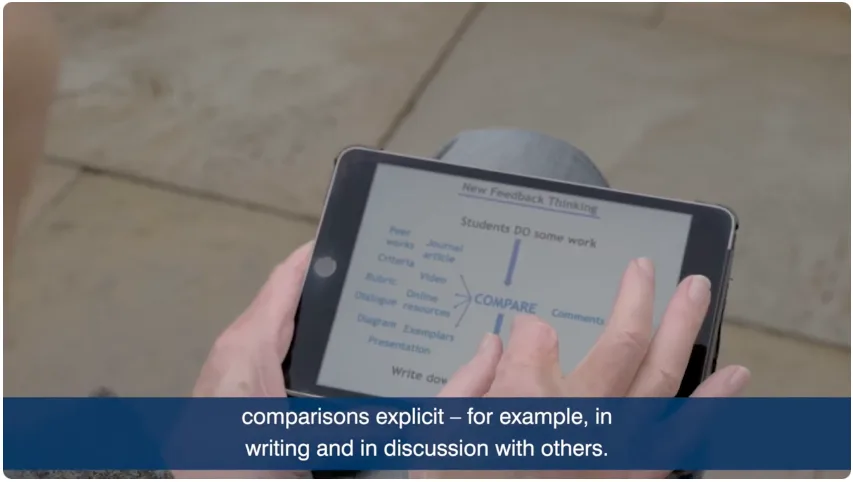
The main part of feedback approach are the guiding questions that the learners need to respond to, and the teacher evaluates and discusses with the learner: what does this artifact tell me about my own work? E.g.: “How did your essay differ from this essay? What did you learn from that difference? How would you improve your own essay? How does it change your thinking”, or “How did your thinking differ from the expert? What did you learn from that? What questions remain outstanding? Use a flow-chart diagram to self-correct your work.” The idea is to make the outputs explicit (e.g., writing, discussion with others, visually in a diagram, use in next task, updating work) and these reflective outputs must form part of the final product.
Read more about the inner feedback approach in VU CTL’s didactic tip 42: How to apply inner feedback for designing powerful courses.
#4.5.5Example 5 - Course guidance
Dr. Meike Morren of VU Amsterdam teaches a course in Business Research methods (2nd year International business students) containing learning statistics using R. She developed a bot on Cogniti of VU Amsterdam to help and to coach students during her course. Morren wanted a combination of a coach who gives advice on the structure and practicalities of the course, combined with Socratic guidance in working on a number of assignments.
For the bot she uploaded all the documents of the course, including slides and assignment, in PDF format. This information was used to ground the responses of the bot for her students.